
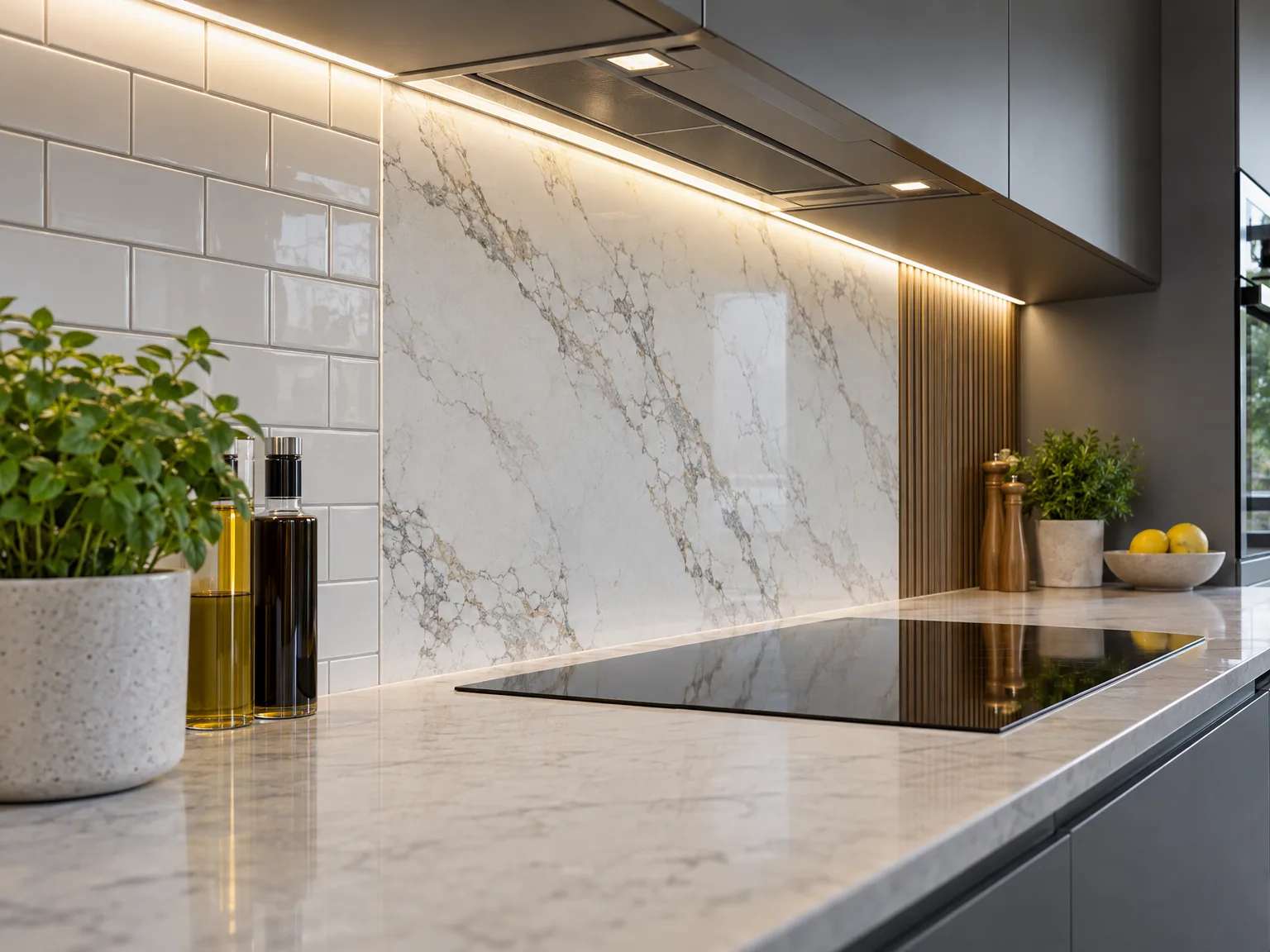
Kitchen Splashback Selection: Design and Durability
Choosing the right material for a kitchen splashback requires balancing practical durability with visual ambition, since each option brings distinct properties that can define the room's entire character.
Table of contents
- Kitchen Splashback Selection: Design and Durability
- What Is a Kitchen Splashback and Why Does It Matter?
- Choosing the Right Material for Your Kitchen Splashback
- Ceramic Tiles: A Classic Kitchen Splashback Option
- Glass Panels: The Modern Kitchen Splashback Choice
- Quartz Surfaces: A Premium Kitchen Splashback Solution
- How a Kitchen Splashback Shapes Your Overall Design Scheme
- Coordinating Your Kitchen Splashback with Worktops and Cabinetry
- The Role of Precise Measurement in Kitchen Splashback Installation
- Common Problems That Result from Poor Kitchen Splashback Fitting
- Integrating a Kitchen Splashback with Plumbing and Electrics
- Kitchen Splashback Refurbishment: Revitalising an Outdated Kitchen
- Maintaining Your Kitchen Splashback for Long-Term Durability
- FAQ - Frequently asked questions
Kitchen Splashback Selection: Design and Durability
Selecting the right material for a kitchen splashback means weighing practical demands against visual ambition - both sides of that equation matter equally. Ceramic tiles, glass panels and quartz surfaces each bring distinct properties: different durability levels, maintenance requirements and visual effects capable of defining the room's entire character. Getting that balance right from the outset prevents costly regret later.
Material Shapes Every Outcome
Each material demands specialist handling - cutting glass safely, grouting tiles correctly, fitting quartz precisely. Poor installation leaves gaps where moisture penetrates and creates maintenance problems that compound over time. The choice must also complement the worktop, cabinetry and overall design scheme to achieve a genuinely cohesive result.
Installation Is Half the Decision
Skilled installation ensures the splashback integrates seamlessly with the wider kitchen rather than sitting as an afterthought. Quality workmanship transforms a sound material choice into a durable, attractive feature that performs reliably for years.
What Is a Kitchen Splashback and Why Does It Matter?
A kitchen splashback sits between worktop and wall units - a protective surface shielding walls from cooking splashes, grease and moisture whilst simultaneously defining the kitchen's visual character. Its contribution spans both the practical and the aesthetic, making it one of the most consequential decisions in any kitchen design.
Protection Beyond the Obvious
Unprotected walls absorb grease, stain permanently and deteriorate quickly behind the hob and sink. The splashback prevents this - but it also frames the cooking space visually, lending character to what might otherwise be a plain expanse of wall. Material choice, finish and colour all carry significant visual weight.
Why Correct Installation Matters
A poorly fitted splashback leaves gaps where moisture penetrates, undermining both the wall and the finish. The right installation:
- seals effectively against water and grease ingress
- integrates seamlessly with worktops, cabinetry and electrics
- elevates the kitchen's overall design coherence
Material choice and installation quality together determine whether the result endures as a lasting asset or becomes an ongoing source of regret.
Choosing the Right Material for Your Kitchen Splashback
The right material shapes how your kitchen looks day to day, how easily it cleans and how well it endures heavy use. Ceramic tiles, glass panels and quartz each bring distinct qualities to the wall, so weighing them against your cooking habits and existing style is worth doing carefully before committing.
Ceramic Tiles: Flexible and Familiar
Few materials match ceramic tiles for sheer variety - they come in a wide range of colours, textures and formats, adapting to almost any design scheme. Grout lines demand consistent cleaning to stay fresh, but individual tiles can be replaced without disturbing the entire surface, which is a genuinely practical advantage in a well-used kitchen.
Glass and Quartz: Refined Alternatives
Glass delivers a seamless, reflective finish that opens up a space visually and wipes clean with minimal effort. Quartz offers comparable elegance with added resilience to heat and impact, making it a strong candidate behind a cooker. Choosing the right kitchen splashback ultimately comes down to balancing the look you want against the level of upkeep you can realistically commit to.
Ceramic Tiles: A Classic Kitchen Splashback Option
Ceramic tiles have stood the test of time as a kitchen splashback material, and for good reason. Their range of patterns, colours and finishes makes them adaptable to virtually any kitchen style-from rustic farmhouse to sleek contemporary. Whether you favour large-format slabs, intricate mosaics or classic subway tiles, the options remain genuinely extensive.
The Grouting Factor
The difference between a durable ceramic installation and a problematic one often comes down to grouting technique. Poorly applied grout allows moisture to penetrate the joins between tiles over time, causing damp patches and discolouration. Skilled application creates tight, sealed joins that withstand the persistent humidity of a working kitchen.
Matching Tiles to Your Kitchen
Ceramic tiles must complement the worktop, cabinetry and overall design scheme to achieve a cohesive result. Their versatility is an asset, but only when selections are made with the whole kitchen in mind rather than the tiles in isolation.

Glass Panels: The Modern Kitchen Splashback Choice
Glass panels have earned their place in modern kitchen design through one defining quality: seamlessness. With no grout lines to harbour grease or disrupt the eye, they create a clean visual sweep across the wall that tiles simply cannot match. Available in a broad spectrum of colours, glass transforms the wall behind your hob into a deliberate design statement rather than an afterthought.
Precision Cutting Is Non-Negotiable
The appeal of glass comes with a significant installation caveat. Glass demands expert handling - a single miscalculation in cutting or drilling produces a crack that ruins the panel entirely. Skilled fitting ensures socket cut-outs, edges and seals all align precisely with the surrounding kitchen elements.
What Glass Brings to the Kitchen
Choosing glass as your kitchen splashback surface offers several practical advantages:
- Surfaces wipe clean in seconds, with no grout lines to trap residue
- A reflective finish opens up smaller kitchens by bouncing light across the room
- Custom colour options allow seamless coordination with cabinetry and worktops
Quartz Surfaces: A Premium Kitchen Splashback Solution
Quartz has earned its reputation as a premium choice - engineered for consistency, it delivers a sleek, uniform surface that ceramic tiles simply cannot replicate. Its non-porous nature resists staining, moisture and bacteria, making it as practical as it is visually striking.
Durability That Speaks for Itself
Choosing quartz as your kitchen splashback brings long-term resilience alongside a genuinely refined aesthetic. Its dense composition handles heat and impact far better than many alternatives, maintaining a pristine appearance for years without demanding excessive upkeep.
Why Specialist Fitting Is Essential
Quartz is unforgiving - heavy, rigid and prone to cracking under stress if mishandled. Professional installation is not optional:
- Precise cutting requires specialist tools to avoid fractures or ragged edges.
- Weight distribution must be managed carefully to prevent unnecessary wall stress.
- Seamless joins demand expert alignment to achieve the flawless, polished finish quartz promises.
Skimping on the installer here risks damaging an expensive material and undermining the premium result you paid for.
How a Kitchen Splashback Shapes Your Overall Design Scheme
The splashback sits at eye level, directly within your sightline as you cook, eat and move through the space. That position alone gives it outsized influence over how the kitchen feels - before you even register the worktops or cabinetry.
Colour and Texture Set the Tone
A well-chosen kitchen splashback can anchor the entire colour palette of the room, introducing warmth, contrast or calm depending on the material and finish. Its surface quality - glossy, matte, textured - amplifies or softens natural light in ways that subtly shift the atmosphere throughout the day.
Coherence Across Materials
For a truly cohesive result, the splashback must respond to the worktop, cabinetry and flooring already in play:
- A bold tile pattern can serve as a focal point against neutral units.
- Glass panels reflect light and visually enlarge compact spaces.
- Quartz surfaces extend the worktop's texture upward for a seamless, unified look.

Coordinating Your Kitchen Splashback with Worktops and Cabinetry
Selecting materials in isolation is one of the most common mistakes in kitchen design. Worktops, cabinets and splashback all occupy the same visual field, so a decision made without considering the others can produce a result that feels disjointed even when each individual element is attractive.
Contrast or Complement?
A strong design approach commits clearly to one direction. If your cabinetry is bold and patterned, a neutral splashback prevents visual competition. Conversely, plain white units can carry a dramatic tile or glass panel without overwhelming the space. The worktop acts as the bridge between the two-its tone, texture and material should echo qualities found in both.
Start with the Full Picture
Bringing samples of all three materials together before committing to any single one reveals clashes that individual swatches conceal. A single installer overseeing the whole kitchen project can advise on this coordination far more effectively than separate contractors working independently, ensuring your kitchen splashback integrates naturally into a coherent, lasting scheme.
The Role of Precise Measurement in Kitchen Splashback Installation
Every millimetre matters when fitting a splashback. Gaps left by imprecise measurement are not merely cosmetic flaws - they become entry points for moisture that slowly damages the wall structure beneath. Skilled installers take multiple readings, account for uneven walls and ensure every edge sits flush against adjacent surfaces.
Alignment Shapes the Finish
Even when individual cuts are accurate, misalignment during fitting can throw off the entire visual result. Tiles must follow consistent grout lines; glass panels must sit level to avoid a warped appearance. The eye is drawn immediately to anything fractionally out of true, so methodical alignment is non-negotiable.
Why Gaps Are Never Acceptable
A properly fitted kitchen splashback leaves no exposed wall behind it. Any gap - however narrow - invites water ingress over time, causing staining, mould and eventual structural damage. Precision measurement is therefore not a finishing touch; it is the foundation of long-term durability.
Common Problems That Result from Poor Kitchen Splashback Fitting
Poor fitting rarely announces itself immediately. Instead, consequences build quietly - until the damage becomes impossible to ignore. Gaps left behind a poorly fitted kitchen splashback create ideal conditions for moisture to accumulate, triggering a chain of deterioration that proves both disruptive and costly to resolve.
What Goes Wrong Over Time
When installation is rushed or imprecise, several problems follow:
- Damp patches develop behind tiles or panels, weakening the wall substrate beneath.
- Grout lines crack prematurely, allowing grease and water to penetrate repeatedly.
- Panels shift or lift at the edges, undermining both hygiene and appearance.
- Mould takes hold in poorly sealed joints, proving stubborn to eradicate.
The Cost of Cutting Corners
Resolving these issues typically requires removing the entire installation and beginning again - a disruption far greater than careful initial fitting would ever have caused.

Integrating a Kitchen Splashback with Plumbing and Electrics
Fitting a kitchen splashback is rarely a standalone task. Behind the wall surface lie sockets, extraction fans, and plumbing runs - all requiring careful consideration before a single tile is cut or a panel is measured. When trades work independently, misalignments become inevitable: a socket sitting proud of the finished surface, or a pipe run forcing an awkward cut through what should be a seamless panel.
Sequencing the Work Correctly
A single installer can route cables and pipes before surface work begins, then finish around fixed points rather than improvise around someone else's decisions - producing a clean, integrated result rather than a patchwork of compromises that is difficult to unpick later.
One Point of Accountability
With one contractor overseeing the whole project, there is no ambiguity over responsibility. If adjustments are needed to accommodate the design, the same person makes that call early - well before rework becomes time-consuming and costly.
Kitchen Splashback Refurbishment: Revitalising an Outdated Kitchen
Replacing an ageing splashback is one of the most impactful ways to modernise a tired kitchen without committing to a complete overhaul. Where cabinetry and worktops remain structurally sound, refreshing this single surface can dramatically shift the room's character - updating outdated finishes and injecting renewed visual energy.
When Refurbishment Makes Sense
A well-timed kitchen splashback upgrade often delivers the greatest transformation when:
- Existing tiles look dated, discoloured or heavily grouted
- A new worktop or cabinetry colour scheme no longer complements the current finish
- Surface damage, cracks or persistent moisture issues have compromised the original installation
Choosing the Right Approach
The refurbishment process demands the same specialist attention as a first-time fit. Material selection, precise cutting and careful alignment ensure the replacement integrates seamlessly with surrounding surfaces - delivering a finish that looks purposeful rather than patched.
Maintaining Your Kitchen Splashback for Long-Term Durability
A well-installed kitchen splashback is built to last - but only if the cleaning routine suits the material. Glass panels wipe clean effortlessly, whilst tiled surfaces demand closer attention to grout lines, where grease and moisture accumulate over time. Quartz, though highly resilient, benefits from prompt cleaning after heavy cooking sessions.
Matching Care to Material
Different surfaces carry different vulnerabilities, and using the wrong cleaning product can dull finishes or weaken sealants. A few consistent habits make a significant difference:
- Wipe down the surface after each cooking session to prevent grease build-up.
- Use non-abrasive cleaners appropriate to the specific material.
- Inspect grout lines periodically and re-seal where signs of deterioration appear.
Why Installation Quality Comes First
No cleaning routine compensates for poor fitting. Gaps left during installation allow moisture to penetrate behind the surface, causing lasting structural damage that routine maintenance simply cannot reverse. A precise, properly sealed installation remains the most important long-term durability decision of all.

FAQ - Frequently asked questions
What role does material choice play in determining a kitchen splashback's performance?
Material choice directly influences both practical performance and visual impact. Ceramic tiles, glass panels and quartz surfaces each bring distinct durability levels, maintenance requirements and aesthetic qualities. The material selected must also complement the worktop, cabinetry and overall design scheme to achieve a cohesive result, making it one of the most consequential decisions in kitchen design.
Why is skilled installation critical to a successful kitchen splashback?
Installation quality is equally important as material selection. Poor installation leaves gaps where moisture penetrates, creating maintenance problems that compound over time and potentially undermining both the wall and the finish. Skilled workmanship ensures the splashback seals effectively against water and grease ingress, integrates seamlessly with worktops and cabinetry, and elevates the kitchen's overall design coherence.
What are the practical advantages of ceramic tiles for kitchen splashbacks?
Ceramic tiles offer exceptional variety in colours, textures and formats, adapting to almost any design scheme. Whilst grout lines require consistent cleaning to remain fresh, individual tiles can be replaced without disturbing the entire surface - a genuinely practical advantage in a well-used kitchen where damage or staining may occur in isolated areas.